

By Lucy Marino, Executive Director, Marketing and Creative, Robert Half
In today’s creative market, technology is advancing as quickly as design trends, pushing professionals to master new digital skills and adapt faster than ever.
The fundamentals of great design will always matter—understanding your audience, telling a compelling story and creating experiences that inspire action. But how those skills are applied is changing fast, fueled by emerging technologies such as AI, innovative digital platforms and shifting consumer expectations.
I talk with creative leaders every week, and there’s a consistent theme: They’re looking for talent who can blend creativity with technical know-how. It’s no longer enough to be “just” a UX designer or “just” a front-end developer. The creatives who stand out are the ones who can connect their work to business goals, navigate multiple tools and digital channels, and adapt to new tech without missing a beat.
Robert Half research backs this up: 69% of marketing and creative leaders say advancements in AI and automation are reshaping, not replacing, the skills they need on their teams. The takeaway for job seekers? If you build the right mix of creative and digital skills now, you won’t just keep up with the industry—you’ll be ahead of it.
Popular design fields today—and the digital skills needed
Today’s most sought-after creative professionals integrate traditional design skills with advanced technical expertise and AI capabilities. Whether the position is an art director, brand designer or visual storyteller, employers want professionals who can shape strategy, produce compelling visuals, and leverage digital and AI tools to elevate brand experiences across digital channels. However, the four design areas I hear about often from hiring managers are UX design, product design, front-end development and visual design. These aren’t just technical proficiencies—they’re strategic capabilities that directly influence how brands connect with their audiences and adapt to tech trends. Below, we’ll explore what these professionals do and the top skills employers need now, as well as salary benchmarks you can expect in these careers from the Robert Half Salary Guide.
1. UX design
UX designers turn complex ideas into seamless, user-friendly experiences. They make sure every click, swipe and scroll feels intuitive—balancing what users want with what the business needs to achieve. Robert Half UX designer job postings highlight the need for skilled professionals who can pair creativity with technical precision. That means conducting user research and usability testing, translating insights into wireframes and prototypes and working fluently in tools like Figma, Adobe XD and Sketch. Employers also look for expertise in A/B testing, accessibility standards and maintaining design systems that keep digital experiences consistent and engaging. Professionals who can combine user empathy with technical expertise are in demand, underscoring the critical impact UX designers have in shaping digital experiences.
2. Product design
Product designers shape the strategy behind digital experiences. They blend creativity with business insight, turning user needs and technical constraints into elegant, scalable solutions. Whether it’s a financial dashboard or a logistics platform, product designers ensure every feature serves a purpose and every interaction feels intentional. They blend creativity with strategy, applying human-centered design principles to ensure solutions are functional, visually engaging and aligned with business goals. Robert Half product designer job postings show that today’s product designers need more than visual flair—they need strategic design thinking and technical fluency. That includes conducting design research, building prototypes and collaborating with engineering and product teams. Employers also value experience with Agile methodologies, tools like Figma, Jira and Confluence, and the ability to lead design initiatives across complex systems. Bonus points for mentoring others and aligning design with business goals.
3. Front-end development
Front-end developers bring digital channels to life. They transform designs into dynamic, responsive web and mobile experiences, ensuring every interaction feels smooth, intuitive and on-brand. In today’s creative landscape, they’re the bridge between design and technology, crafting interfaces that not only look great but perform flawlessly across devices. Robert Half front-end developer job postings show that front-end developers need a blend of technical precision and creative sensibility. Core skills include HTML, CSS and JavaScript, with growing demand for TypeScript and modern frameworks like React, Vue and Angular. Developers are expected to turn mockups into perfect code, optimize performance and collaborate with designers to ensure visual consistency. Bonus points for experience in mobile-first development, cross-browser compatibility and staying current with trends like progressive web apps and micro front-end architecture. Professionals who can code with clarity, collaborate across disciplines and elevate the user experience through performance-driven design are especially valued in today’s digital marketplace.
4. Visual design
Visual designers shape the look and feel of a brand’s identity across digital and print platforms. They craft compelling visuals that communicate ideas, evoke emotion and reinforce brand consistency—whether it’s a sleek mobile interface, a bold event poster or a polished presentation deck. In today’s creative landscape, visual designers are storytellers, using design to connect people with products and messages in meaningful ways. Robert Half visual design job postings show these professionals need a strong foundation in graphic design, paired with the ability to work across print, digital and mobile platforms. Proficiency in Adobe Creative Cloud tools, especially Photoshop, Illustrator and InDesign, is essential. This is one area where technology is constantly evolving—and the ability to integrate related AI skills in this field is critical to success. Employers also value experience in branding, style guide creation and visual storytelling. Skills in motion graphics, data visualization and interface design are increasingly in demand, especially for designers who can collaborate with UX and product teams. Designers who bring cross-platform versatility, branding expertise and a strong visual voice are especially sought after—making this a high-impact role in today’s design-driven economy.
Understanding AI is essential to creative career success
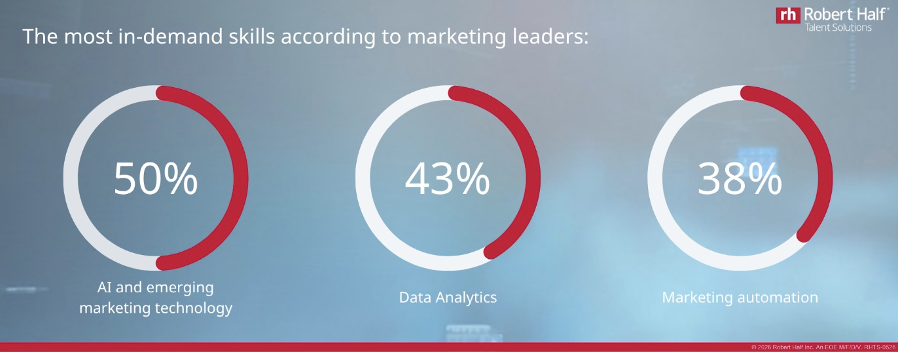
A few years ago, AI felt experimental. Today, it’s part of the daily workflow for many designers—and soon, it will be the norm. Robert Half research shows 50% of marketing leaders list expertise in AI and emerging marketing technology as their most in-demand skill for successfully delivering digital marketing initiatives, followed by data analytics (43%) and marketing automation (38%). And here’s the opportunity: Half of creative leaders say their biggest barrier to adopting new tech is a lack of staff with the right skills. If you can close that gap, you instantly stand out.
Here’s how creative professionals can develop their AI skills:
- Gain experience with AI design tools like Adobe Firefly, Midjourney or Runway ML
- Learn digital marketing tools like HubSpot, Marketo or Salesforce to understand how design ties into campaigns
- Stay current with industry blogs, webinars and peer communities
A tip for job seekers: In interviews, highlight how you used AI to save time, test concepts or improve creative outcomes—and explain the human judgment you applied to the process. Demonstrating enthusiasm for and a strategic approach to using the latest tools can help you catch the attention of today’s hiring managers.
The soft skills creative leaders notice
We often hear this, and it’s true: Technical skills get you noticed. Soft skills get you hired. With 49% of marketing and creative leaders citing cross-functional collaboration as a top challenge to project success, companies value creative professionals who can explain their work clearly, give and receive feedback effectively and adapt quickly when priorities change.In hybrid and remote teams, digital communication skills matter just as much. Today’s marketing and creative leaders have seen too many talented designers struggle simply because they couldn’t present ideas virtually in a way that built trust and clarity. The opposite is also true—those who excel at keeping distributed teams aligned quickly become indispensable.
The future of creative jobs: How to get hired now
Are you a creative professional seeking a new opportunity or career change? Mastering skills in the areas of UX design, product design, front-end development or visual design and pairing them with AI and digital fluency can make you the candidate employers want. Those who build this skill set through professional experience or digital upskilling won’t just get interviews—they’ll get offers and set themselves apart in a competitive hiring landscape.
This article was previously published by Robert Half, the world’s first and largest specialized talent solutions and business consulting firm, connecting highly skilled job seekers with rewarding opportunities at great companies. We offer contract talent and permanent placement solutions in the fields of finance and accounting, technology, marketing and creative, legal, and administrative and customer support. Explore talent solutions, research and insights at roberthalf.com.